
Practical Steps for Coping with Loneliness and Building Connections
Understanding Loneliness
Loneliness can quietly affect your health and well-being, even when everything on the surface looks “fine.” At its core, loneliness is the feeling of being disconnected — of not having the kind of closeness, understanding, or companionship you want. And it can show up anywhere: when you're completely alone or when you’re surrounded by people.
Loneliness often isn’t about quantity of relationships, but about quality and fit.
You might:
exchange friendly greetings with neighbours yet still crave deeper connection
be in a romantic relationship but miss having close friends
have friends you enjoy but long for a different type of relationship
feel “known” in some areas of life but invisible in others
All of these are forms of loneliness.
Loneliness can feel stronger when your routines leave little opportunity for natural connection — living alone, working remotely, or spending most of your time in solitary activities. These aren’t inherently problematic, but they can shrink the number of small, everyday interactions that help us feel part of something.
Social media adds another layer.
It can create the illusion of connection — liking posts, keeping up, scrolling — while quietly increasing comparison and self-doubt. You may feel plugged in, yet still miss the deeper, slower, more reciprocal interactions that genuinely reduce loneliness.
And here’s the nuance:
You can have a full social calendar and still feel lonely.
You can spend lots of time alone and feel deeply connected.
Loneliness isn’t a character flaw or a failure. It’s a sign that your need for meaningful connection is asking for attention.

Listening to Your Own Experience
Your subjective experience matters more than anything else. Plenty of people genuinely enjoy long stretches of solitude and feel grounded, peaceful, and restored by it. For them, being alone isn’t lonely.
But when loneliness is present, it’s worth paying attention. It can be a signal — not that something is wrong with you, but that something in your social world needs care. We know from research that persistent loneliness is linked with higher rates of anxiety, depression, heart disease, stroke, and even dementia. Some groups are especially vulnerable, such as older adults and people who experience discrimination or stigma. When your sense of belonging is threatened, loneliness can deepen.
Acknowledging loneliness can be uncomfortable. Most of us are quick to distract, minimize, or push it away. But avoidance often makes it louder over time. A gentler approach is to notice it, name it, and then explore what it might be asking for.
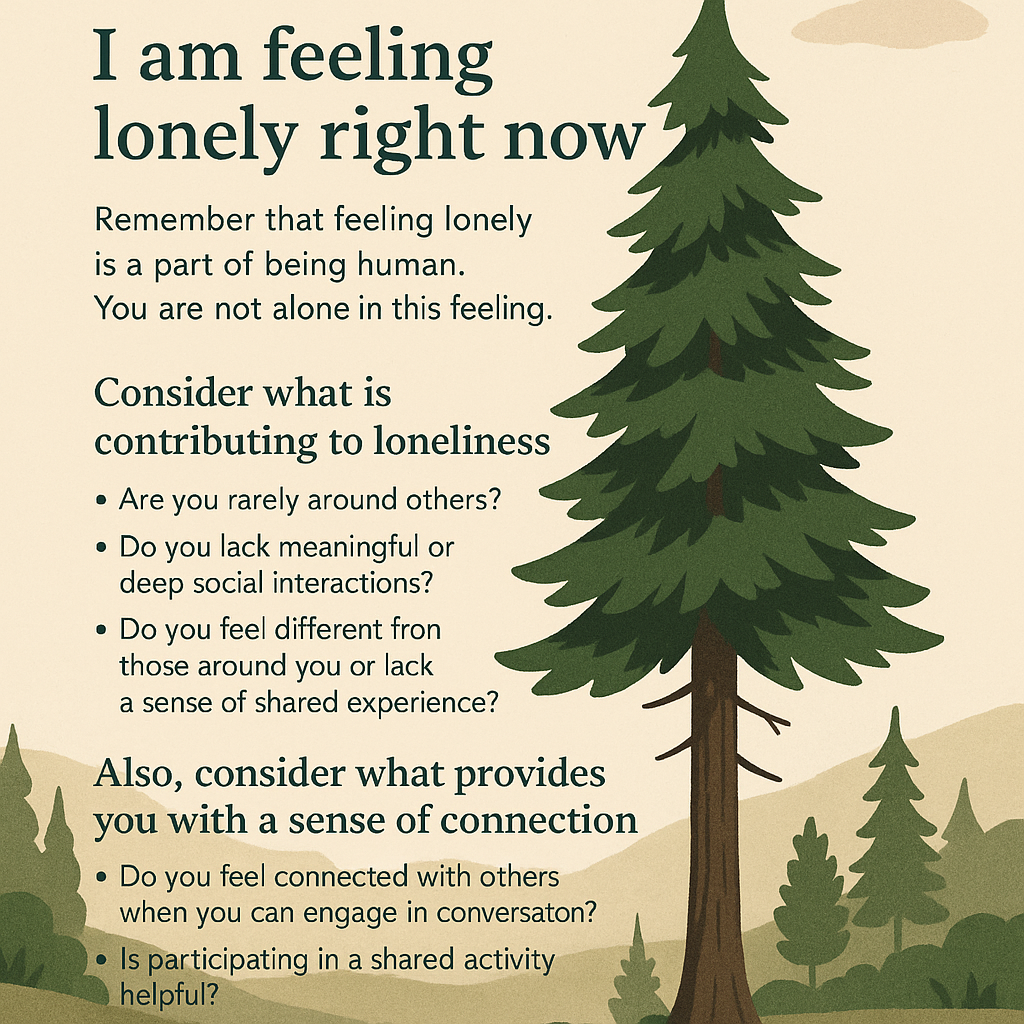
Working with the Thoughts and Behaviors That Shape Loneliness
Loneliness isn’t just about circumstances — it’s also shaped by the thoughts we have about those circumstances. It’s very common to slip into all-or-nothing thinking such as, “I’ll never make friends,” or “I’m going to feel this way forever.”These thoughts are understandable, especially when you’re hurting, but they tend to make loneliness feel heavier.
When you notice these kinds of thoughts, try to slow down and give them a little space. You don’t need to argue with them or pretend to feel differently. Instead, gently reframe them into something more balanced and manageable. For example:
“I am lonely right now, and I’m taking small steps that increase my chances of connecting with people.”
This shift doesn’t deny your experience — it widens it.
Take one small, realistic step toward connection.
You don’t need to overhaul your social world all at once. Start with something that feels doable, not daunting. That might be joining a local art class, a walking group, a volunteer shift at a food bank, or a weekly spiritual or meditation group. The goal isn’t instant friendship — it’s simply creating opportunities for connection to happen.
Reconnect with people you already know.
Sometimes loneliness is eased by deepening existing relationships rather than finding brand-new ones. Is there someone in your life you’d like to know a little better? A co-worker you enjoy talking to? A friend you haven’t video-chatted with in months? Reaching out can feel vulnerable, but it also creates a real opening for closeness to grow.
Treat yourself with kindness as you navigate this.
Building connection takes time, patience, and some emotional risk. You may not always get the outcome you hope for, and that’s okay. Being gentle with yourself matters. Let yourself enjoy things that bring you comfort or pleasure — a favourite meal, a relaxing activity, a quiet afternoon of rest. Effort itself is meaningful. Even when progress feels slow, taking small, values-based steps is still movement toward the kind of life you want.
Healing loneliness rarely comes from a single breakthrough. It comes from small, consistent actions taken with self-compassion. Every attempt — every conversation, every moment of reaching out, every reframed thought — is part of rebuilding a sense of belonging.

Dr. Jennifer Caspari, Registered Psychologist
References:
National Academies of Sciences, Engineering, and Medicine. (2020). Social isolation and loneliness in older adults: Opportunities for the health care system. Washington, DC: The National Academies Press.
Jennifer Caspari, PhD, is a Registered Psychologist at Tall Tree, Vancouver. Please contact Tall Tree Vancouver, Commercial, to book with Jen!
RELATED POSTS