Work–Life Balance: What It Means and How to Realistically Implement It
Work–life balance is something many of us talk about — usually when we’ve realized how out of balance things feel. There are only so many hours in a day, and the list of responsibilities (including the unpaid ones) can stretch endlessly. When that happens, work can start to spill into every corner of life, leaving us exhausted and overwhelmed.
What “Balance” Actually Means
Work–life balance isn’t one-size-fits-all. For some, it means unplugging from work at a certain time each day. For others, it’s having enough flexibility to respond to unexpected life events. It can help to reflect on what throws your life off balance and what a more balanced version would look like.
For example, maybe your past few weekends have been consumed by unfinished tasks, leaving no space for rest or play. Balance, in that case, might mean intentionally carving out time for recreation — not as a luxury, but as a necessity.
A helpful definition of balance is this:
Not feeling consumed by work in a way that harms your well-being, relationships, or sense of satisfaction with life.
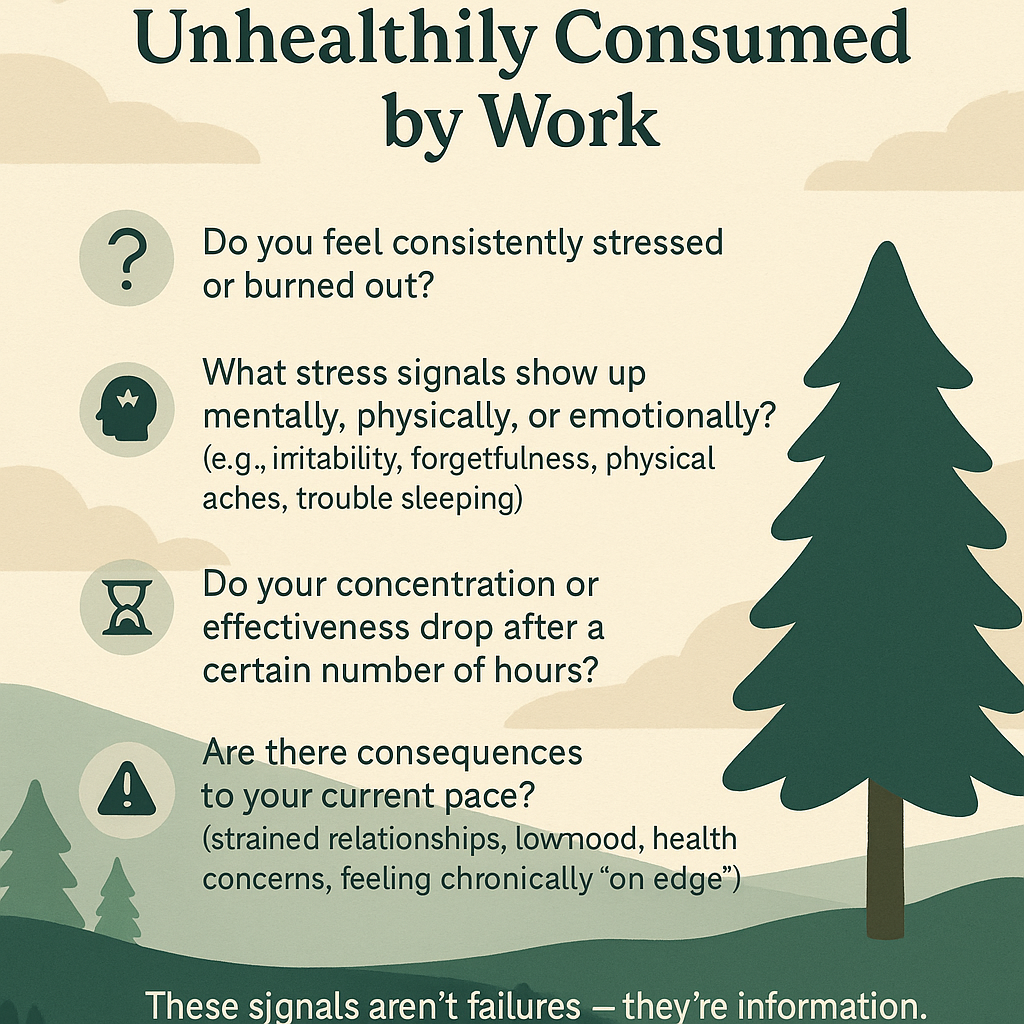
When work starts taking more than it gives, your mind and body usually give you a heads-up — quietly at first, then not so quietly.
This image breaks down a few early signs you might be getting swallowed by work — and reminds you that stress signals are just info, not something you’re doing wrong.
Strategies for Achieving More Balance
1. Set boundaries around work
Think about whether it would help to choose a daily “stop time,” or to keep one day of the week work-free. Small boundaries create big breathing room.
2. Communicate your boundaries
Let colleagues, friends, and family know what you’re aiming for. Boundaries work best when the people around you understand them.
3. Set time limits for tasks
If you tend to overwork certain tasks, experiment with time caps. Stopping after a set amount of time keeps one task from taking over your whole day.
4. Organize your tasks intentionally
Use a planner or calendar to map out your time. The more specific you are (“emails from 9:00–9:30”), the easier it becomes to stay balanced.
5. Use reminders or alarms
If you get absorbed in tasks easily, set cues to step away. An alarm can act as an external guardrail when your internal one slips.
6. Make space for self-care
Schedule time to recharge — moving your body, resting, spending time with people you care about, or doing something enjoyable. Self-care isn’t extra; it’s part of balance.
Just like a forest needs periods of growth and periods of rest, so do we. Finding balance is less about rigid rules and more about tending to your energy with intention and care.

Dr. Jennifer Caspari, Registered Psychologist
References:
National Academies of Sciences, Engineering, and Medicine. (2020). Social isolation and loneliness in older adults: Opportunities for the health care system. Washington, DC: The National Academies Press.
Jennifer Caspari, PhD, is a Registered Psychologist at Tall Tree, Vancouver. Please contact Tall Tree Vancouver, Commercial, to book with Jen!
RELATED POSTS