
Grief and Loss Related to Chronic Illness
Living with a chronic illness often means living with ongoing change. A chronic illness is a condition that lasts longer than a few months and requires continued medical care and/or limits everyday activities. Over time, this can reshape the way you move through the world. You may find that certain activities you once did easily now require modification — or are no longer possible. Work roles may shift, social plans may change, and relationships can take on new dynamics as you navigate what you can realistically do and the kind of support you need from others.
These changes can be painful, not just practically but emotionally. Grief is a common — and completely valid — response to chronic illness. You may grieve the life you used to have, the physical freedom or spontaneity that once felt effortless, or the sense of trust you had in your own body. You might also mourn future plans you were excited about, now made uncertain by unpredictable symptoms and an unclear path forward.
This grief doesn’t mean you’re giving up; it means you’re human. It reflects how much your life, identity, and hopes matter to you.

“Loss of reliability can be unsettling, frustrating, and deeply painful.”
When you’ve never had to think much about your health, it’s easy to take your body for granted. Most of us assume our bodies will do what we ask of them — when we need them to — without question. Chronic illness can disrupt that sense of trust. Many people describe feeling betrayed by their body, especially when symptoms are unpredictable or interfere with daily tasks that once felt effortless. That loss of reliability can be unsettling, frustrating, and deeply painful.
There’s no set timeline for grieving these changes, and no single “right” way to cope. Grief around chronic illness is personal and often nonlinear. Still, there are evidence-backed strategies that can support you as you navigate loss, rebuild a sense of stability, and find ways to live meaningfully alongside a chronic condition.
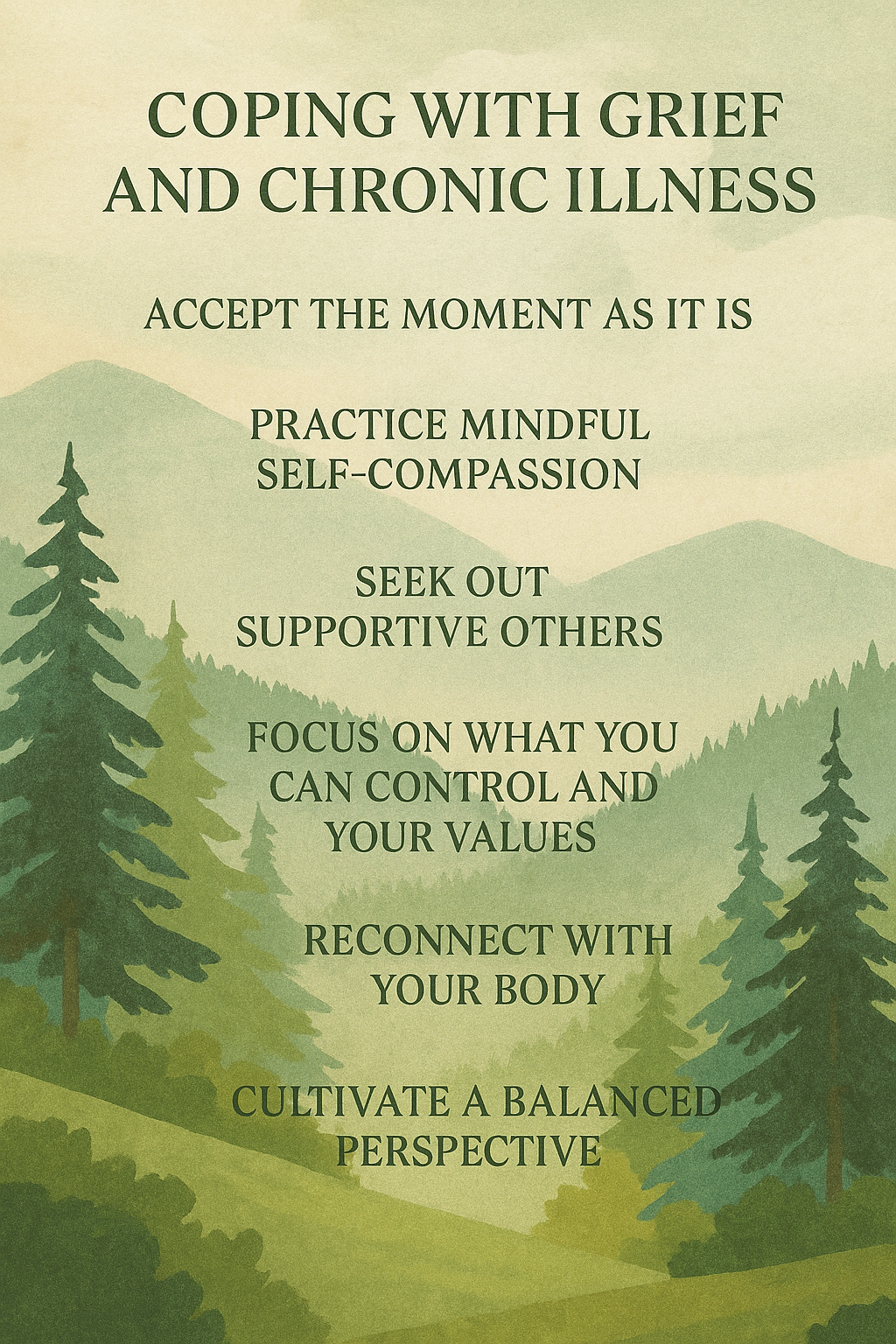
Your Guide to Coping With Grief and Chronic Illness
These are the main themes. You’ll find deeper insights and practical tips below.
Strategies for Coping with Grief and Chronic Illness
1) Practice accepting the moment as it is right now.
Acceptance doesn’t mean you like what’s happening or that you’re giving up. It simply means acknowledging your experience without fighting it. This frees up emotional energy and creates space for more helpful choices in the moment.
2) Acceptance coping statements can help, such as:
This moment is what it is, even if I don’t like it.
I accept this moment as it is.
Fighting my reality only increases my distress.
Although this moment is unpleasant, I can cope with it as it is.
3) Practice mindful self-compassion.
Grief is a valid, human response to chronic illness. Try speaking to yourself the way you would speak to someone you love — with warmth, understanding, and patience. Self-criticism is common, but it’s not helpful.
4) Seek out supportive others.
Surround yourself with people — healthcare providers, friends, and family — who you feel safe with and who genuinely listen. Support doesn’t have to be perfect to be meaningful.
5) Focus on what you can control — and on your values.
When chronic illness limits certain choices, values can serve as a compass. Ask yourself what matters most to you, and look for small, realistic actions that align with those values.
6) Rebuild a sense of connection with your body.
Gentle movement like stretching, slow walking, or yoga (standing or seated) can help you reconnect with what your body can do today. Even small actions can restore a sense of agency.
7) Cultivate a balanced perspective.
It’s easy to zoom in on the hardest parts of your experience. But multiple truths can exist at once — pain and progress, frustration and resilience, limits and possibilities. When you acknowledge the full picture, you create more room to respond intentionally instead of out of habit.
Living with a chronic illness brings real losses, real adjustments, and real grief. There’s no “right” pace for finding your footing again. What matters most is meeting yourself with gentleness and choosing small, meaningful steps that help you move toward the life you want — even in the midst of uncertainty.

Dr. Jennifer Caspari, Registered Psychologist
RELATED POSTS