
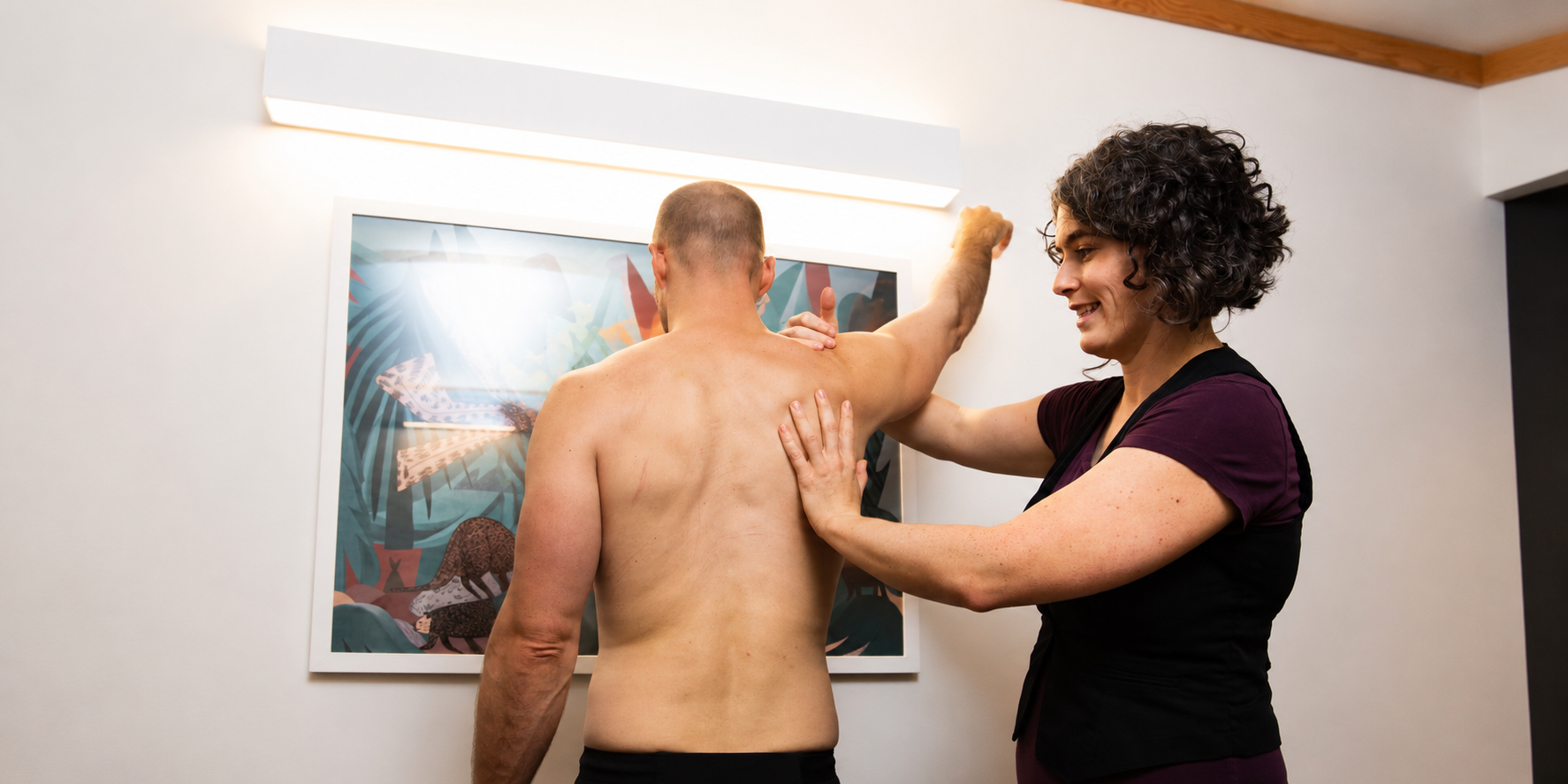
Recover from injury and get back to the activities that matter to you.
Athletic Therapy
Jump to: How We Can Help | Meet Myriam | FAQs | Book Now
Move better. Feel stronger.
What is Athletic Therapy?
Athletic therapy helps people recover from muscle, bone and joint injuries so they can get back to the activities that matter to them.
Treatment combines hands-on care with movement and exercise to help reduce pain, rebuild strength and mobility, and support a safe return to work, exercise, sport or everyday life.
And despite the name, you don't have to be an athlete.
Athletic Therapy can help you with:
-
Managing soft tissue injuries, such as sprains, strains and tears to muscles, tendons and ligaments
Joint issues, such as managing arthritis, chronic stiffness and persistent pain
Supporting recovery from both new and long-standing injuries
Addressing issues throughout your entire body, including back, neck, shoulder, hip, and knee pain
Comprehensive posture, gait, and functional movement screening to identify limitations
Tailored, activity-specific exercises and training programs to build resilience and support performance
-
Tailored post-operative recovery protocols
Safe management of healing bone fractures
Protected loading to safeguard sensitive tissues while they heal
-
Rebuilding strength, mobility, and flexibility
Improving stability, movement control, and your body’s ability to adapt to physical demands
Enhancing balance, coordination and agility specific to your activities and goals
Preventing injuries and optimizing performance
-
Using an evidence-based approach to help you understand the root cause of your problem
Explaining exactly how your treatment plan addresses your concerns
Reviewing clear home-care instructions to support safe active living
Empowering you to take a proactive approach to your recovery
Meet Myriam Barreda

Myriam Barreda
CERTIFIED ATHLETIC THERAPIST
After experiencing a varsity sports injury at UVic, I saw firsthand how athletic therapy and exercise can support recovery. That experience inspired my passion for helping people stay active, prevent injuries, and return to the activities they love.
I have a background in personal training, Olympic weightlifting, and competitive CrossFit. Through athletic therapy I have worked with athletes from the Vancouver Whitecaps and UVic Vikes. I enjoy supporting people of all ages and abilities, with a focus on sports injuries, posture, fall prevention, and running.
I combine careful assessment, manual therapy, and exercise to address the source of your symptoms and support lasting results. Book an appointment with me to get started.
Care Tailored to you
What to Expect
Your athletic therapist will take the time to understand your injury, how it’s affecting your life, and what you want to get back to. From there, you’ll build a treatment and rehabilitation plan together.
Book an appointment or contact us to learn more.
-
Your first appointment begins with a detailed conversation about your injury, health history, daily activities, and recovery goals. Your athletic therapist will then perform a comprehensive assessment of your range of motion, strength, and functional movement to identify the affected structures and underlying factors contributing to the issue.
You'll leave with a better understanding of your injury and a clear treatment plan. Initial care may include hands-on manual therapy, joint mobilizations, soft tissue techniques, swelling management, or exercises to support your recovery.
-
Follow-up appointments include ongoing clinical assessments to adapt and build upon your treatment plan. These sessions may include hands-on treatment, targeted mobility techniques, therapeutic exercise, strengthening, or taping.
FAQs
-
Not at all. Athletic therapists work with athletes and non-athletes alike. If an injury or pain is making it harder to work, exercise, play a sport, or enjoy everyday life, athletic therapy may be able to help.
-
Athletic therapists treat injuries and concerns involving muscles, bones, joints, ligaments, and tendons. This includes both new and long-standing injuries, with treatment focused on restoring movement, supporting recovery, and helping prevent reinjury.
Athletic therapy can help with:
Sprains and strains
Muscle and tendon injuries
Joint pain and injuries
Back and neck pain
Sports and overuse injuries
Recurring or long-standing injuries
Gait and posture concerns
Returning to sport, exercise, work, or everyday activities
Injury prevention
Healthy aging and fall prevention
-
Treatment is completely customized to your unique injury and lifestyle goals. Athletic therapy uses an active, movement-based approach to rehabilitation. Your therapist will combine hands on therapy and exercise therapy to help you feel and move better.
Athletic therapy aims to improve your body's overall movement systems, including your balance, strength and endurance. In addition to hands-on therapy and exercise, athletic therapists can also use custom taping and education to help you manage your symptoms, prevent future re-injury, and return to your favourite activities with confidence.
-
Athletic therapy may be a good fit for you if:
You’re recovering from a muscle, bone, or joint injury.
You want to return to a sport, activity, or active lifestyle.
You’re looking for a movement-based assessment and treatment plan that may include hands-on therapy, targeted exercises, and progressive rehabilitation.
Your extended health plan includes coverage for athletic therapy.
Not sure whether to start with a physiotherapist, kinesiologist, chiropractor, registered massage therapist, or athletic therapist? Contact our team and we’ll help you find the right place to start.
-
Yes. Athletic therapy can help with both recent and longstanding injuries. Your therapist can assess whether lingering pain, weakness, stiffness, or movement limitations may be contributing to ongoing symptoms or making it difficult to return to certain activities.
-
No, do not wait. Seeing an athletic therapist within the first 48 hours helps speed up recovery, manage swelling, and prevent further damage.
However, seek immediate emergency medical care if you experience:
Severe, unbearable pain
Visible bone deformity or misaligned joints
Inability to bear weight on the limb
Numbness, tingling, or a cold, blue limb
If you are ever unsure, consult your doctor or primary care provider first.
-
Athletic therapists can identify areas of weakness, mobility restrictions, and movement patterns that may affect how your body handles physical demands. They can then develop a plan to improve strength, mobility, and resilience.
-
Coverage varies between extended health benefit plans. We recommend checking with your insurance provider to confirm whether athletic therapy is included in your plan and whether a referral is required.
-
Yes, athletic therapy may be covered by ICBC depending on your claim and approved treatment. Contact us and our team can help you determine your coverage options.
Get STARTED
How to Book
Athletic therapy is available virtually or in person at our James Bay, Victoria location.