Your rehab guide for acute and persistent symptoms
Make this page comfortable
Adjust your reading view. Simpler view hides images; your settings last until you reload.
Read a little at a time and take breaks as needed. Adjust your device brightness and reduce reflections to suit your comfort. If reading or screens keep causing symptoms, tell your healthcare provider.
Tall Tree Health · Patient education
Your Concussion Recovery Guide
Understand concussion symptoms, manage activity and plan your return to everyday life.
Clinical reviewer: Sean Overin, Registered Physiotherapist
For adults aged 18 and older with a suspected or diagnosed concussion, and the people supporting them. General education to support your care, not a diagnosis, personal treatment plan or medical clearance.
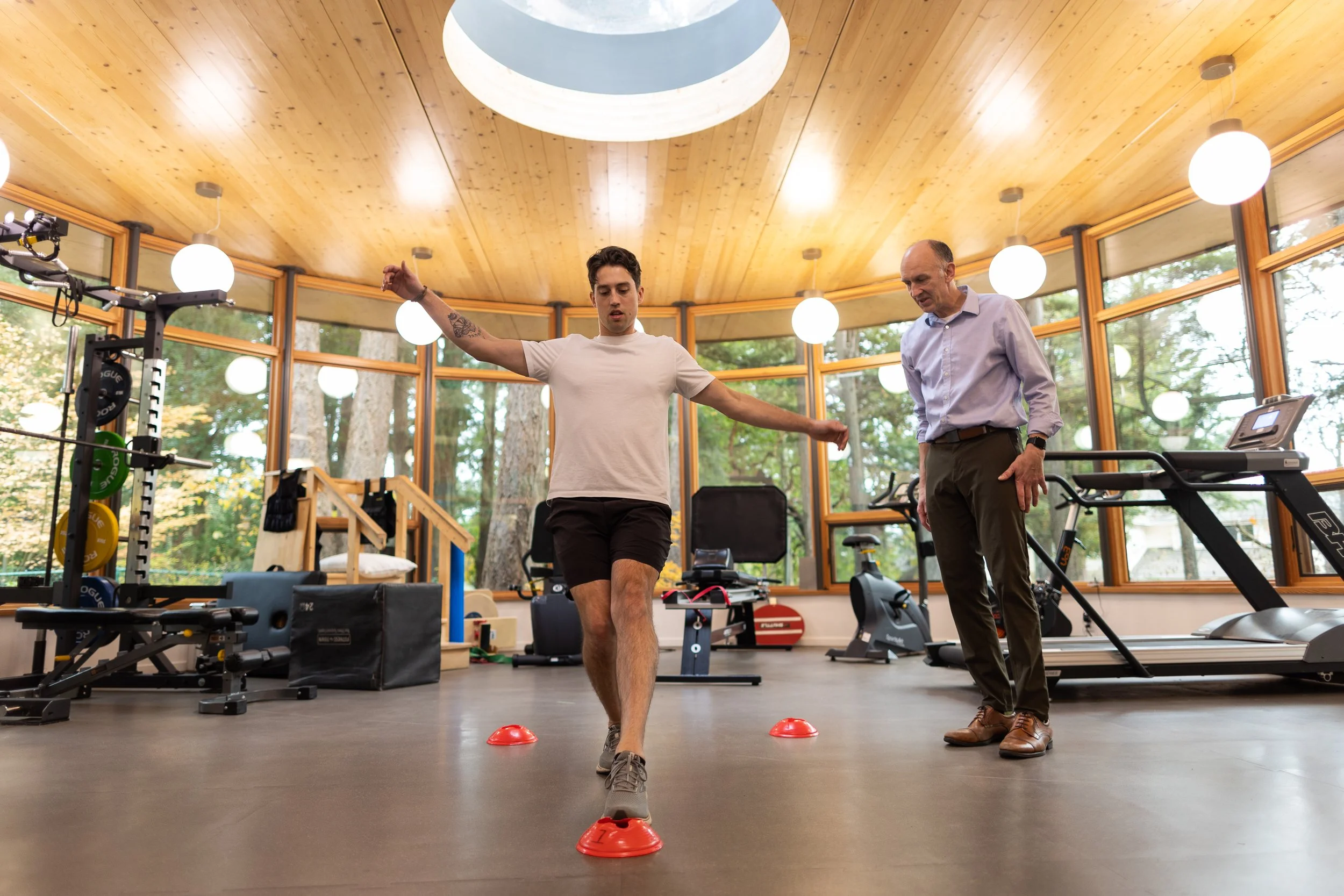
Concussion assessment at Tall Tree · Cordova Bay
Just had a concussion? Check the warning signsWarning signs need urgent help — call 9-1-1 or go to emergency.
Get urgent help for these warning signs
After a head or body injury, call 9-1-1 or go to the nearest emergency department now for:
A severe or worsening headache
Repeated vomiting
A seizure, loss of consciousness or difficulty waking
Increasing confusion, unusual behaviour or slurred speech
New weakness, numbness or double vision
Severe neck pain or tenderness
Do not drive yourself. If you suspect a neck or spine injury, avoid moving the person and call 9-1-1. These signs need emergency assessment, not an online booking.
Get started
One useful step at a time
Start with assessment. Then build activity at your pace.
Recently injured?
Arrange prompt medical assessment if concussion is suspected. Follow the advice you receive and avoid another head injury.
Already assessed?
Build activity using your care plan. Arrange follow-up if symptoms persist; seek earlier advice if they worsen.
If you take blood thinners, seek prompt medical advice after a head injury even if you feel well.
What to expect
Recovery usually unfolds over weeks
A common pattern, not a deadline. Your recovery may look different.
1
24–48 hours
The early days
Symptoms can feel most noticeable. Keep activity quiet and manageable.
2
1–2 weeks
Improvement begins
Many people notice steady improvement, with some ups and downs.
3
2–4 weeks
Recovery for most
Most people recover within a few weeks. Some need longer.
4
Beyond 4 weeks
Look more closely
Symptoms are considered persistent. Assess what is contributing to them.
5
6–12 weeks
Target the contributors
If symptoms continue, focus care on headaches, neck, balance, vision, sleep and mood.
You don’t need to wait for a milestone to get help.
Seek follow-up if symptoms worsen or are not improving. Beyond the label “post-concussion syndrome,” the useful question is: what is contributing to your symptoms?
The key to moving forward
Find your starting point. Build from there.
After 24–48 hours of relative rest, gradually resume safe activity with your clinician’s guidance. You do not need to be symptom-free to start.
+2
At most 2 points higher
On a 0–10 symptom scale, compared with before the activity.
Back within 1 hour
Return to your starting symptom level. Both limits matter.
For low-risk activity, alongside your clinician’s plan. These are limits, not targets. New, severe or unusual symptoms need assessment regardless of the score.
Your symptom traffic light
For low-risk activity, compare symptoms with your starting level.
✓
Green · Repeat, then build gradually
Rise ≤2 points · settle within 1 hour. No lasting flare later or next morning? Repeat before building.
Ⅱ
Amber · Pause and adjust
Rise >2 points or still above baseline after 1 hour? Stop, let symptoms settle and reduce the next dose. Ask your clinician about repeated or next-day flares.
!
Red · Get urgent help for warning signs
A worsening severe headache, repeated vomiting, seizure, increasing confusion, weakness or difficulty waking needs urgent medical attention. Call 911 or go to emergency. Do not use a symptom score to rule out danger.
Rate symptoms, not effort. Follow your clinician’s individual limits.
Your next step, in four moves
01Start smallChoose one safe activity. Note your starting symptoms.
02Check inNotice the rise and how long it takes to settle.
03RepeatCheck later and the next morning before building.
04AdjustBuild one thing if manageable; reduce the dose if not.
Change one thing at a time
TimeA slightly longer walk or reading block.
EffortA little more pace or resistance, once the current amount is manageable.
ComplexityOne task first, then a more demanding task.
EnvironmentA quiet setting first, then gradually more distraction.
Keep the other demands steady so you can tell what changed your symptoms. A busier workday may leave less capacity for exercise.
A flare is feedback to adjust.If you are still worse the next day, reduce the load and review your plan. Worsening that lasts more than 24 hours suggests you exceeded your tolerance. Contact your clinician if symptoms keep worsening or you cannot find a manageable starting point.
Avoid activities with risk of another head injury. This symptom guide does not clear you for driving, heights, contact sport or activities where a fall is possible. New emergency warning signs need urgent help.
Learn at your own pace
Your concussion companion
Choose a topic below. Open only what you need today.
Companion 01
I’ve had a concussion. What should I do?
Start with safety, relative rest and a gradual return to activity.
01
Start Here
A concussion is a brain injury from a blow or jolt to the head, neck or body. You can have one without losing consciousness.
Suspect a concussion? Stop and see a doctor or nurse practitioner promptly. Rehabilitation supports this medical assessment; it does not replace it.
Ask someone you trust to stay with you initially and follow the monitoring instructions you receive. Symptoms may appear later. Do not return to sport on the day of a suspected concussion.
Your first steps
StopLeave the activity and avoid another impact.
Get assessedSeek medical care. Use the warning signs above for emergencies.
Make a planAsk about daily activity, follow-up and support at home.
Try this todayIf you have not been medically assessed, arrange that now. If you have, put your follow-up appointment and care instructions somewhere easy to find.
02
Early Recovery
For the first 24–48 hours, use relative rest: ease back on demanding tasks, reduce screen use and keep simple daily activities as tolerated. You do not need to spend the day in a dark room.
Then add safe movement and thinking tasks gradually. Use the activity progression guide to judge symptoms and plan breaks.
If symptoms keep worsening or do not settle with an adjustment, contact your clinician. New emergency warning signs need urgent help.
Take a quiet break that feels restful. It does not have to mean doing nothing.
An example day — adapt it to your needs
MorningBreakfast and one small household task.
MiddayA quiet break, then a short, safe walk if tolerated.
AfternoonOne manageable task, with another break planned.
Illustration only. No fixed activity or break duration is right for everyone.
Try this todayChoose one task and plan a break around it. If it is too much, shorten it, simplify it or choose a quieter setting.
Companion 02
Managing ongoing issues
Understand your symptoms and know when to get more support.
03
Symptoms and Support
Your symptoms are real. Concussion, neck injury, balance or vision problems, sleep, mood and fatigue can interact. An assessment helps identify what needs attention; symptoms alone cannot tell you the cause.
Headaches and neck symptoms: tell your clinician about the pattern and any medicines you use. Neck assessment may help guide treatment. Ask before changing pain medicines; frequent use can contribute to headaches.
Dizziness, balance and vision: describe what brings them on. Assessment can guide vestibular rehabilitation or referral for eye care. Avoid self-prescribing balance or eye exercises.
Sleep: aim for regular sleep and wake times. Ongoing insomnia, heavy snoring or marked daytime sleepiness deserves assessment.
Mood: anxiety, irritability or low mood can occur after injury. Psychological support can help with coping and recovery.
Examples of support — your clinician helps coordinate
Headache or neck painDoctor / nurse practitioner + physiotherapist
Dizziness or balanceClinician with vestibular training
Fatigue or daily tasksOccupational therapist + primary care
Sleep or moodPrimary care + psychologist or sleep clinician
You do not have to decide which professional to see. Your concussion assessment helps identify the support that fits your needs.
Try this todayWrite down the symptom most affecting your day, what you were doing when it occurred and what helped. Bring this to your next appointment.
04
When Recovery Needs More Support
Arrange follow-up with your primary care provider within 1–2 weeks of injury, or sooner if symptoms worsen. If symptoms are not improving, ask about targeted rehabilitation. You do not need to wait a month to ask for help.
Symptoms lasting beyond four weeks deserve a fuller review. Your clinician can look at headaches, neck function, balance, vision, sleep, mood and the demands of your day, then arrange appropriate referrals.
Ask who is coordinating care, what you are working towards and when you will review the plan. If treatment is not helping, the plan should be reassessed. Recovery varies; a difficult day does not define the whole process.
Bring your care together
Your prioritiesName the daily activities you want help with.
Shared planAgree on which support is useful and who coordinates it.
ReviewCheck what is helping and change the plan when needed.
Try this todayPrepare three questions for your next visit. Consider bringing a trusted person to help you remember the discussion.
Companion 03
Your recovery guide
Choose meaningful goals and make everyday recovery manageable.
05
Choose a goal. Break it into parts.
Choose a goal: making dinner, seeing a friend or completing a work task. Note what help you need.
Start with a manageable version. Adjust the task, setting or time, then build with your clinician.
A difficult day is a reason to adjust your plan, not a failure.
Worked example — getting back to cooking
My goalPrepare a meal for my family.
A smaller startPrepare one simple part, sitting down if useful.
Support and pacingAsk someone to handle the rest and plan a quiet break.
Try this todayUse the “My recovery plan” tool below to choose one goal, one manageable first step and one source of support.
06
Getting Back to Daily Life
A gradual return to work or adult study can be part of recovery. You may need shorter days, fewer tasks, extra time or a quieter space. Agree on temporary adjustments and a review date with your clinician and workplace or education team.
After the first 48 hours, reintroduce screens in manageable amounts. Try larger text, fewer open tabs and breaks away from the screen. Adjust the workload to how you respond.
Do not drive while dizziness, vision changes, slowed thinking or fatigue make it unsafe. Ask your doctor or nurse practitioner about driving, machinery, heights and other safety-sensitive duties.
Worked example — an adult returning to desk work
The taskReply to a full inbox while taking calls in a busy office.
A temporary adjustmentHandle a small batch of emails in a quiet space, pause calls and take a planned break. Review with the employer.
Try this todayPick one difficult part of your day. Use the checklist below to ask for one practical adjustment.
07
Movement and Exercise
Choose a safe aerobic activity: a level walk or stationary bike may suit some people. Your clinician can help choose an option if balance, dizziness, neck pain or other health conditions affect exercise.
Start with a short, easy amount you can tolerate. Check it against the mild-and-brief symptom guide. You do not need to provoke symptoms for exercise to count.
Example progression — not a prescribed dose
If a 5-minute easy walk is manageable, repeat it. When ready, try 6 minutes at the same pace and on the same route. If symptoms rise too much or take too long to settle, return to the last manageable amount or less. Your starting time may be shorter or longer.
Build one variable: extend time in small steps before adding more pace, hills or resistance. Avoid increasing duration and effort together. Your clinician may use exercise testing to set a personal heart-rate range and adjust it as you improve; this page does not prescribe one.
Review the whole day: exercise, screens, work and poor sleep can affect what you tolerate. Progress when the current load is manageable, rather than following a fixed weekly percentage. Repeated setbacks are a reason to review the plan, not abandon movement.
A flexible activity pathway
ChooseSelect a low-risk activity with your clinician.
NoticePay attention to how you feel during and afterwards.
AdjustRepeat, make it easier, or build gradually as advised.
You can pause or step back. This is a decision process, not a recovery timeline.
Try this todayIdentify a safe place for gentle movement. If balance or dizziness makes walking unsafe, ask for help choosing an alternative.
08
Support sleep and everyday nutrition
Sleep: try a regular wake time and a quiet wind-down routine. Keep your sleep space comfortable. Tell your clinician about ongoing insomnia, heavy snoring or marked daytime sleepiness; these can need specific treatment.
Food and fluids: aim for regular meals, a varied diet and enough to drink. Simple meals and help with shopping can make this easier when you are tired.
There is not enough evidence to recommend a particular supplement or special diet as a concussion treatment. Discuss supplements and major dietary changes with your healthcare provider, especially if you take medicines.
An example of making the basics easier
PrepareKeep an easy meal or snack available.
Make spaceChoose a calm activity to wind down.
Ask for supportBring persistent sleep or appetite problems to your clinician.
Try this todayChoose one manageable change: prepare an easy meal, ask for shopping help or set aside a wind-down time.
09
Make room for calm and connection
Worry, frustration and low mood deserve care too. Your symptoms are real.
Try slow breathing, quiet music or time with someone you trust. Adjust or stop if you feel worse.
Ask for help with everyday tasks. Tell your clinician if anxiety or low mood affects daily life.
An example — making a social visit manageable
Keep it smallMeet one trusted person.
Make it quieterChoose a calm setting and a short visit.
Leave roomAllow a break afterwards and adjust next time.
Try this todayChoose one person you can tell what support would be useful today.
10
Returning to Sport
Managing everyday tasks does not mean you are ready for contact sport. Follow a sport-specific, supervised return-to-sport plan.
Under the Canadian guideline, each sport step takes at least 24 hours and may take longer. A doctor or nurse practitioner must provide medical clearance before step 4 (non-contact training drills), and before any earlier activity with a risk of head impact, collision or falling. Return to usual learning should be complete first, if applicable.
Later stages require resolution of concussion symptoms and relevant clinical findings, including with exertion. If symptoms return after clearance, stop and seek reassessment before resuming those stages. This page cannot clear you for sport.
Two different pathways
Daily lifeGradual return with adjustments as needed.
Medical decisionAssessment and clearance before higher-risk sport activity.
Sport progressionSupervised training, then contact practice and competition as cleared.
Overview only. Use the full Canadian return-to-sport strategy with your clinician.
Try this todayAsk your clinician which sport activities are safe now and which need medical clearance. Share the plan with your coach.
Quick refresher
A moment to review
Six reminders to take with you.
From a small start to your next step
1
Step 1 of 6
Choose one meaningful activity
Choose a meaningful, low-risk activity. Start small.
2
Step 2 of 6
Check your starting symptoms
Rate symptoms from 0–10 before starting. That is your baseline.
3
Step 3 of 6
Keep the increase mild and brief
For low-risk activity, aim for no more than a 2-point increase, returning to baseline within 1 hour. New, severe or unusual symptoms override the numbers.
4
Step 4 of 6
Repeat before you build
Check later and the next morning. Once manageable, increase one thing at a time.
5
Step 5 of 6
Adjust when the dose is too much
More than +2 or longer than 1 hour? Stop, recover and try less next time. Discuss repeated flares with your clinician.
6
Step 6 of 6
Keep support in your plan
Review with your care team. Head-impact, collision or fall risks need a separate return plan and medical clearance when required.
Practical tools
Make the next step easier
Choose one worksheet. Open it when you are ready to plan or print.
Your notes stay with you.
This code does not send or store your entries. They are temporary and cleared when you leave or reload the page. Print or save a PDF to keep a copy. No email is needed. Avoid entering identifying details on a shared device.
01
Activity and break plan
Open the worksheet · fill in or print
Tool 01
Activity and break plan
Completed example — hypothetical
Activity: easy 5-minute walk on a level route. Symptoms: 2/10 before, 3/10 at the highest point; back to 2/10 after 20 minutes. Later / next morning: no lasting increase. Next attempt: repeat; consider a small increase when consistently manageable. This is an example, not a starting dose for everyone.
02
Work or study accommodation checklist
Open the worksheet · fill in or print
Tool 02
Work or study accommodation checklist
Completed example — hypothetical
Difficulty: concentrating in long meetings. Request: shorter meetings, a written summary and a quiet break afterwards. Review: discuss with my supervisor and clinician at our agreed check-in.
03
My recovery plan
Open the worksheet · fill in or print
Tool 03
My recovery plan
Completed example — hypothetical
Goal: prepare a family dinner. Why it matters: I enjoy cooking for people I care about. Barrier and support: standing and planning feel tiring; I can start with one part and ask someone to help. Question: “How can I build this up safely?”
What activities are safe for me now?
Which symptoms need further assessment?
Who is coordinating my care, and when should we review it?
One place to start
Let’s understand what you need.
Understand your symptoms and build a recovery plan with our concussion team.
For a new suspected concussion, seek prompt medical assessment by a doctor or nurse practitioner. Rehabilitation supports that care. Emergency warning signs need urgent medical attention.
Optional reading
More from the Tall Tree blog
Optional reading, when you are ready.
Browse articles and download the three Tall Tree guides



 How Concussion Can Affect Your Mental HealthExplore the emotional side of concussion, including anxiety and stress.Read article
  Traveling with a ConcussionPlanning and pacing a trip during recovery. Discuss travel suitability with your healthcare provider.Read article